
How to Check Your Colorado Property Tax Records Online by County
Checking your property taxes in Colorado doesn’t have to be confusing. Whether you’re a homeowner, buyer, or investor, knowing how to look up property taxes online helps you verify amounts, spot errors, and claim exemptions.
Each county in Colorado offers official online portals where you can search by address, parcel number, or owner name, view current balances, and review past payments. Doing this regularly keeps you informed, avoids penalties, and makes property management easier.
In this guide, you’ll learn exactly how to check your Colorado property tax records online by county, step by step, so you can save time and stay in control of your property finances.
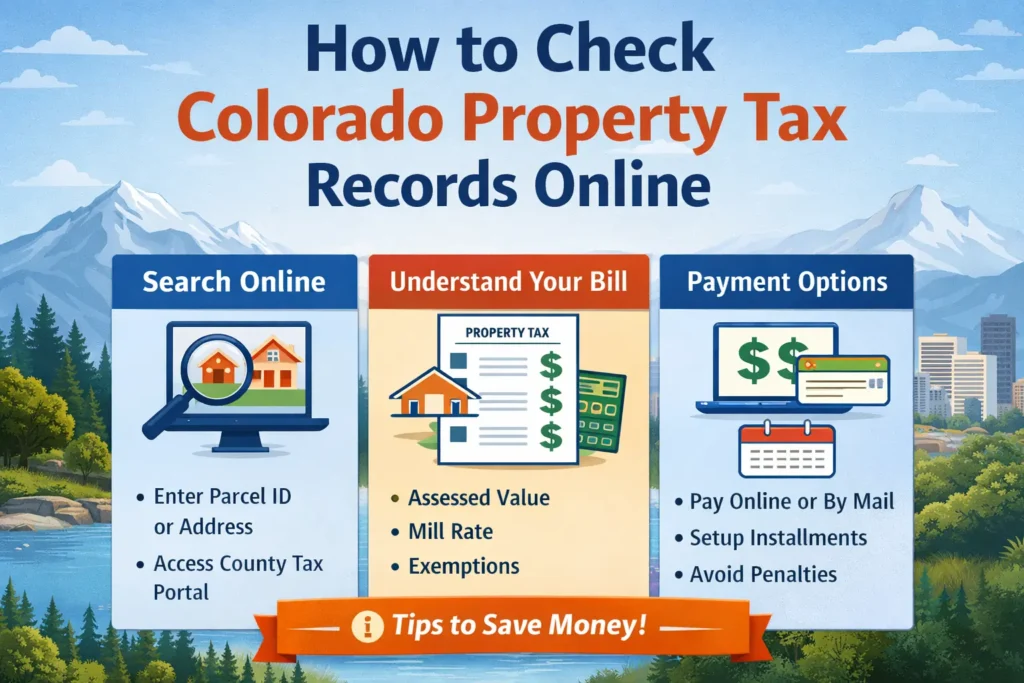
What Are Colorado Property Taxes?
Property taxes in Colorado are annual taxes levied on real estate to fund local services like schools, roads, public safety and other community programs. Every property owner is responsible for paying these taxes based on the assessed value of their property.
These taxes are collected and managed by county officials primarily the county assessor, who determines property value, and the county treasurer, who handles billing and payments. Most counties bill property taxes once or twice a year, with deadlines varying slightly depending on local regulations.
It’s important to note that property tax rates differ by county, reflecting local budgets and community needs. For example, Denver County may have a different mill rate than Adams or Arapahoe County, which can impact the total amount you owe.
Understanding these basics helps you anticipate your property tax obligations, plan your finances and avoid surprises when payments are due.
Why Checking Your Property Tax Records Online is Important
Knowing how to access your property tax records online can save you time, money and stress. Whether you’re a homeowner, buyer or investor, these records give you clarity and control over your property finances.
Prevent Late Fees and Penalties
Paying attention to your property tax balances online ensures you never miss a deadline. Counties in Colorado typically have strict payment schedules, and even a small delay can result in extra charges. Checking online regularly keeps you ahead and avoids unnecessary fees.
Verify Your Property Details
Online records allow you to confirm that your property address, parcel number, and assessed value are accurate. Mistakes in these details can affect your taxes, so early detection helps prevent problems later.
Identify Errors in Assessment
Sometimes property assessments are incorrect or outdated. By reviewing your records, you can spot discrepancies and, if needed, file an appeal with your county assessor to correct your property value before it impacts your taxes.
Discover Exemptions and Credits
Colorado offers various exemptions and credits, like senior, veteran, or homestead exemptions. Checking your records online lets you verify eligibility and claim these benefits, potentially lowering your tax burden.
Support Investment and Buying Decisions
For buyers and investors, property tax records provide insight into ongoing costs, helping you compare properties across counties and make informed decisions. Understanding tax history also highlights trends in property value and local budget changes.
How to Check Colorado Property Tax Records Online
Accessing your Colorado property tax records online is fast and convenient. By using official county portals, you can verify taxes, review past payments, and plan ahead, all from your computer or phone.
Step-by-Step General Guide
Follow these steps to find your property tax information online:
Step 1: Visit Your County’s Official Portal
- Each county has an official website for property tax records.
- You can usually find it by searching: “[County Name] Colorado property tax records”.
Step 2: Enter Property Details
- Property address
- Parcel ID or account number
- Owner’s name
Step 3: Review Property Tax Information
- Current and past tax balances
- Assessment details
- Available payment options
- History of payments
This step-by-step approach ensures accuracy and helps you stay on top of your property tax obligations.
Common Property Search Fields
When using county portals, you can typically search using these fields:
- Owner Name – Search by the property owner’s legal name.
- Parcel ID / Account Number – Unique identifier assigned by the county assessor.
- Property Address – Street address of the property.
- Map / GIS Lookup – Use interactive maps to locate the property visually.
Tip: Using the correct field saves time and avoids errors, especially if properties have similar addresses or owner names.
List of Major Counties & Links to Property Tax Records
Colorado has 64 counties, each maintaining its own property tax portal. Below is a list of major counties with official links, so you can quickly check property taxes, review assessments, and make payments online.
| County | Property Tax Portal | Quick Tip |
|---|---|---|
| Denver | Denver County Property Tax | Search by owner name or address for fastest results |
| Adams | Adams County Property Tax | Parcel ID lookup is most accurate |
| Arapahoe | Arapahoe County Property Tax | Check for exemptions online |
| Boulder | Boulder County Property Tax | Use GIS map for visual search |
| Jefferson | Jefferson County Property Tax | Verify assessment details annually |
| El Paso | El Paso County Property Tax | Keep account number handy for faster lookup |
| Larimer | Larimer County Property Tax | Check prior years’ payments |
| Weld | Weld County Property Tax | Parcel ID ensures exact match |
| Pueblo | Pueblo County Property Tax | Online payments available |
| Mesa | Mesa County Property Tax | GIS maps help locate rural properties |
Tip: For other Colorado counties, search “[County Name] Colorado property tax records” or visit the official county website. Many counties also provide interactive GIS maps, historical tax data, and online payment options
How to Understand Your Property Tax Bill
Your Colorado property tax bill may look complicated, but understanding each part helps you verify accuracy and manage payments effectively. Here’s a simple breakdown:
Assessed Value: This is the value assigned to your property by the county assessor, which forms the basis of your taxes. For example, a home valued at $300,000 with a 7.15% assessment rate has an assessed value of $21,450.
Mill Rate / Tax Rate: The mill rate determines how much tax you owe per $1,000 of assessed value and varies by county based on local budgets. Multiplying your assessed value by the mill rate gives the total tax due.
Exemptions and Credits: Colorado offers exemptions like senior, veteran, homestead, and agricultural relief. Applying eligible exemptions can reduce your total tax liability, so always verify them on your county portal.
Total Taxes Due: After applying exemptions and credits, the remaining balance is your total property tax due. Your bill will also show any previous unpaid balances and available payment options.
Payment Deadlines and Late Fees: Property taxes are typically due once or twice a year depending on the county. Paying late can result in penalties and interest, so it’s crucial to check deadlines and pay on time.
✅ Tip: Regularly compare your physical bill with online records to ensure accuracy, prevent mistakes, and plan your payments efficiently.
Property Tax Payment Options
Colorado counties offer multiple ways to pay property taxes, making it convenient to stay on top of your obligations. Here’s how you can pay:
Online Payments
Most counties provide secure online portals to pay property taxes with a credit/debit card or bank transfer. This method is fast, allows you to view receipts immediately, and keeps your records organized.
In-Person or Mail Payments
You can also visit your county treasurer’s office or send a check by mail. Always include your parcel ID or account number to ensure your payment is credited correctly.
Payment Plans
Some counties offer installment or partial payment plans, letting you spread larger balances over multiple months while avoiding penalties and interest.
Security Tips for Online Payment
Use only the official county portal, avoid public Wi-Fi when entering sensitive information, and keep a copy of your receipt for your records.
✅ Tip: Select the payment method that suits you best and always pay before the deadline to prevent late fees or interest charges.
Colorado Property Tax Exemptions & Credits
Colorado offers several property tax exemptions and credits to help eligible homeowners reduce their tax burden. Checking eligibility and applying correctly can save you money and ensure compliance. Here are the main types:
- Senior Exemption
- Available to homeowners 65 years or older who meet income requirements.
- Can lower assessed value and reduce property taxes on primary residences.
- Veteran Exemption
- Colorado provides tax relief for disabled veterans and certain active-duty military members.
- Eligible veterans can claim a partial or full exemption, depending on disability level.
- Homestead Exemption
- Designed for primary residences, this exemption reduces the taxable value of the home.
- Helps new homeowners or those with limited income lower their property tax bill.
- Agricultural or Open Space Exemption
- Land used for farming, ranching, or preserved open space may qualify for reduced taxes.
- Encourages land conservation and productive agricultural use while lowering tax liability.
- Disability Exemption
- Homeowners with permanent disabilities may qualify to reduce property taxes.
- Requirements and benefits vary by county, so always check your official county portal.
✅ Tip: Review your county’s property tax portal regularly to confirm eligibility for all exemptions, submit applications on time, and ensure your bill reflects any reductions.
Frequently Asked Questions
1. How do I find my parcel ID in Colorado?
Every property has a unique parcel ID assigned by the county assessor. You can find it on your property tax bill, county assessor portal, or via GIS maps on the county website. Using the parcel ID ensures accurate searches.
2. Can I check past years’ property taxes online?
Yes. Most Colorado counties provide historical property tax records on their portals. You can review previous balances, payments, and assessment history to track changes over time.
3. What if I paid my property taxes late?
Late payments may result in penalties and interest, which vary by county. Check your county treasurer’s portal for exact amounts, and pay as soon as possible to minimize additional charges.
4. Can I view property taxes for someone else?
Yes, Colorado property tax records are public information. You can search by owner name, address, or parcel ID, but some personal details may be restricted for privacy reasons.
5. How often are property tax records updated?
County portals generally update property tax information regularly, often after assessments, payments, or exemptions are processed. Check your specific county portal for exact update schedules.
6. How do I appeal my property tax assessment?
If you believe your property is overvalued, you can file an appeal with your county assessor or Board of Assessment Review. This process varies by county, so check the official portal for deadlines and documentation requirements.
Conclusion & Next Steps
Checking your Colorado property tax records online is simple, efficient, and essential for every property owner, buyer, or investor. By understanding your assessed value, tax rate, exemptions, and payment options, you can avoid penalties, manage your finances effectively, and make informed property decisions.
To stay on top of your property taxes:
- Bookmark your county’s official portal for quick access to records and updates.
- Verify your property details and assessments regularly to catch errors early.
- Check for eligible exemptions or credits to reduce your tax liability.
- Plan your payments ahead of deadlines to avoid late fees and interest.
Taking these steps ensures you remain in control of your property finances and can confidently manage your Colorado properties without surprises.
✅ Tip: Start by visiting your county’s official property tax portal today and review your property records online. Regular monitoring helps you save money, avoid penalties, and stay informed.